

Is the Cheapest Option Always the Cheapest?
Price competition in the construction industry is intense, and attention often focuses only on the quoted price. But what happens when the cheapest option is not the most cost-effective in the end? Here are our CEO's thoughts on the subject.

The Challenge of Price Competition
Is the cheapest option always the cheapest? The question came to mind again when a client asked why there can be such large differences between Quotations from different contractors.
Pricing in the renovation construction market has been challenging for some time. When there are few other ways to stand out in a tender, the surest way to attract attention is often to submit the lowest price. Sometimes the differences are caused by human error, which is hopefully identified during the negotiation stage. Even so, many people have said, and I cannot disagree, that this kind of situation is not healthy. But is the lowest price really always the cheapest?
The Importance of the Overall Package
Recently, I saw excellent customer feedback in which the client explained that they had selected Jovikäri as the contractor even though our price was not the lowest. However, very little additional work arose during the project. So, although our quotation was not the cheapest at the tender stage, was it ultimately the most cost-effective overall?
Fortunately, this is not an isolated case. It is the result of systematic work built on accurate cost calculations and disciplined tendering.
When a project is assessed carefully and the requirements of the contract program are properly considered without forgetting a reasonable margin, it is common to hear that significantly cheaper Quotations have been received. A low-priced quotation is not necessarily a poor one, and a more expensive quotation is not automatically better. The key is to understand where the difference comes from and how the price has been calculated.
The Cheapest Option Is Not Always the Most Cost-Effective
I would argue that the lowest price is not always the cheapest when the project is considered as a whole. In our own operations, we sometimes need to assess Subcontractor Quotations and consider whether the lowest bid can realistically deliver the project to the required standard.
Will the cheapest subcontract eventually lead to a constant search for additional work, creating extra pressure for both the project manager and the client? Sometimes the most responsible decision is to reject the lowest quotation because the consequences may be serious for both parties.
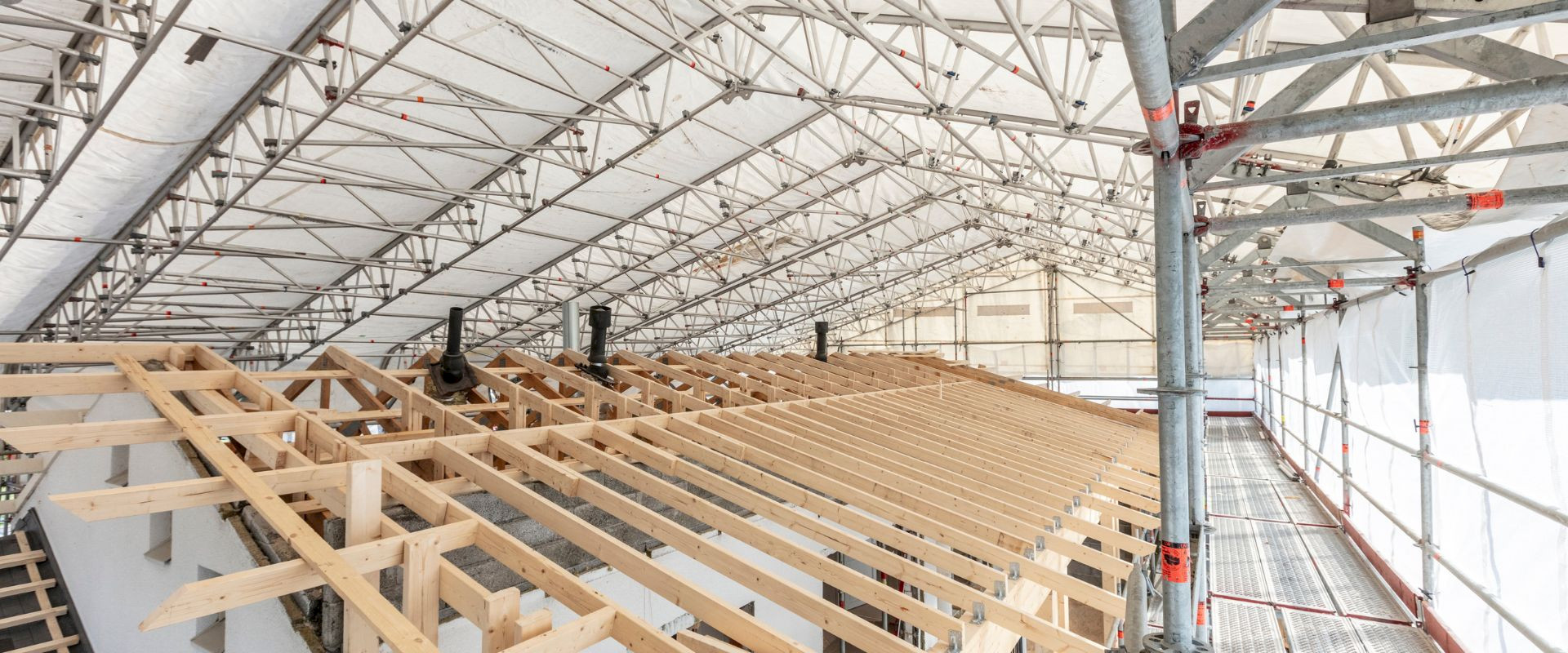
Of course, if a competitor has access to the same exceptionally low-priced subcontract and is willing to proceed with it, the calculation may already be close to an unacceptable level of risk. We also often need to check whether items such as scaffolding and protective measures have been included in accordance with the contract program and who is actually responsible for them.
In the end, a quotation consists of many responsible decisions that are also made with the client's best interests in mind.
Responsibility and Quality Come at a Cost
Everything has a price. This also applies to remaining a financially strong and responsible company that is committed to high customer satisfaction in the future.
Well-managed construction sites and reliable operations do not happen by chance. They are the result of careful work in both cost calculation and project delivery on site.
If this topic raised any thoughts, please contact us . Let's continue the discussion about construction solutions and responsible contracting.
Mika
CEO